THE NECESSITY OF RESISTANCE:
MEHTAP BAYDU’S FEMINIST VOICE
The works of Mehtap Baydu, an artist of Kurdish origin living in Berlin, address situations faced by women living under oppressive patriarchal systems. Despite cultural and religious diff erences, patriarchies have plenty in common: they all silence women and all minorities. Baydu seeks to empower women to overcome the forces that constrain their freedom and development. Baydu’s fi rst solo exhibition in Poland [1] is titled Necessity and revolves around four strategies for fi ghting for women’s rights proposed by the artist:
The First Necessity: Resistance to Oppressive Traditions
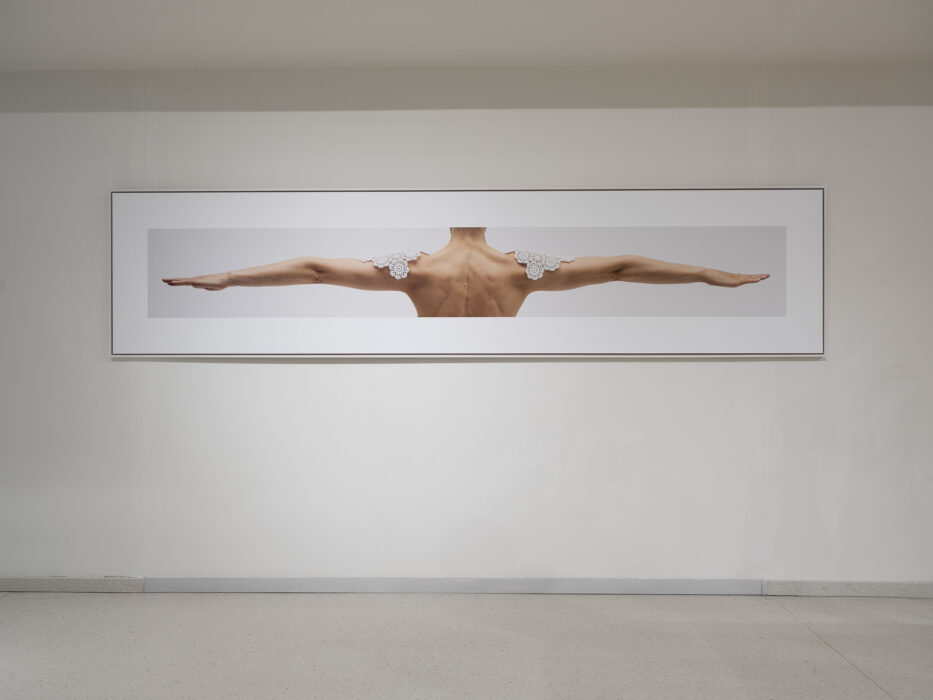
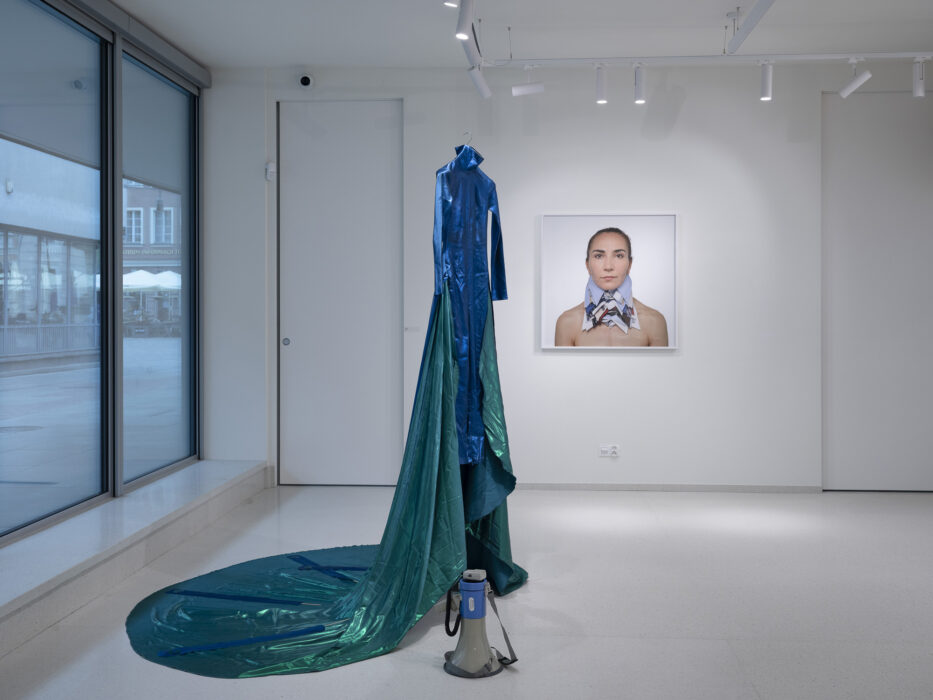
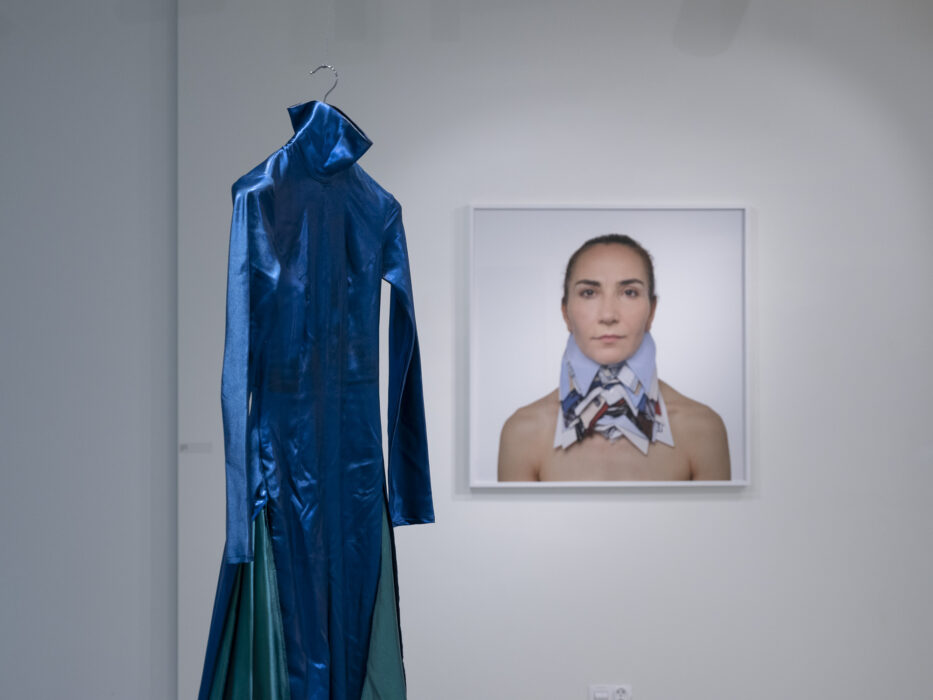
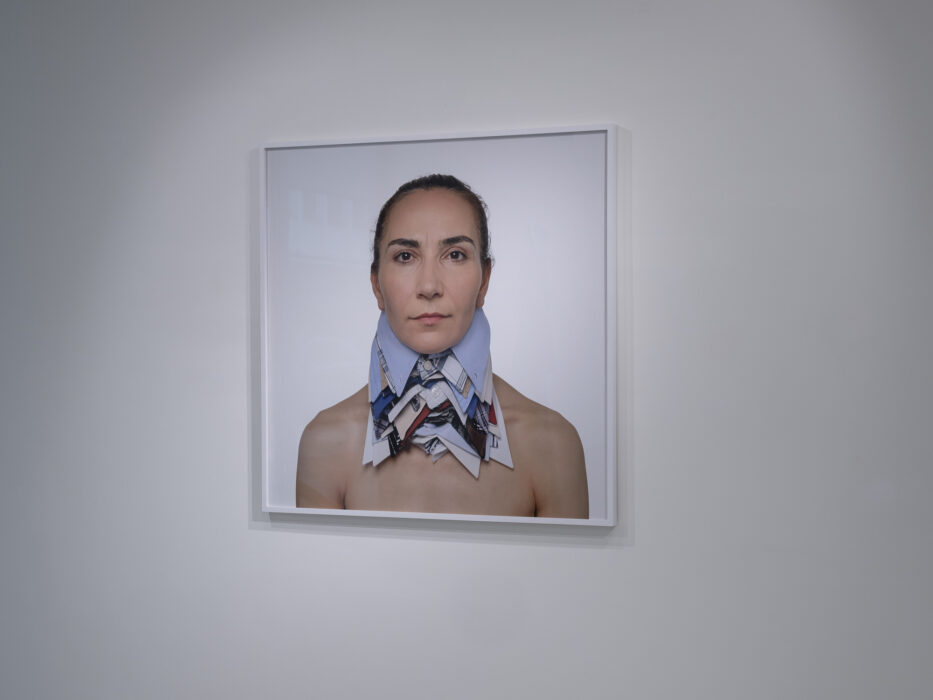
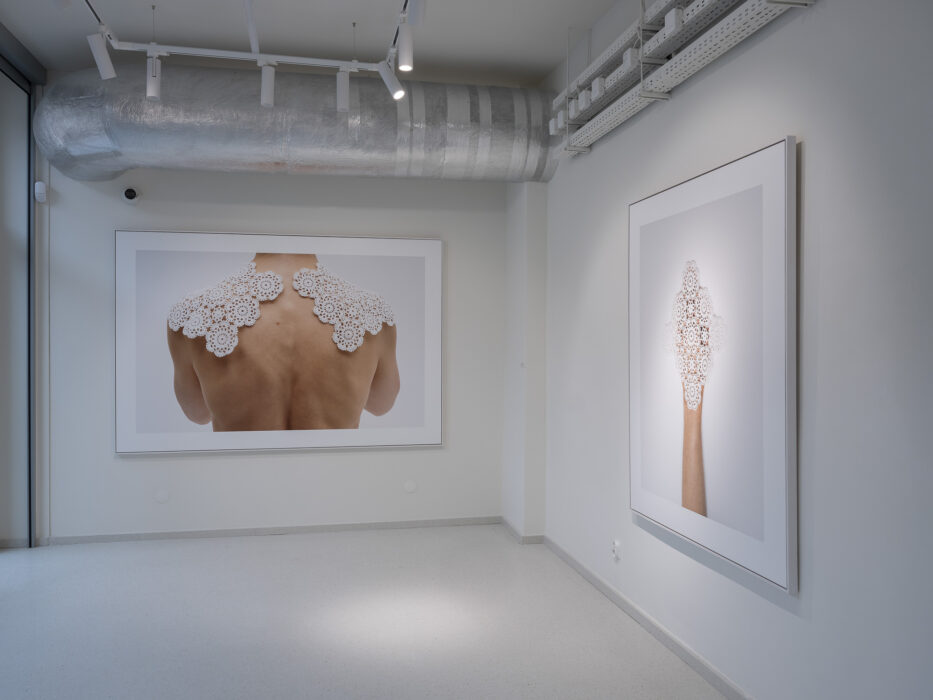
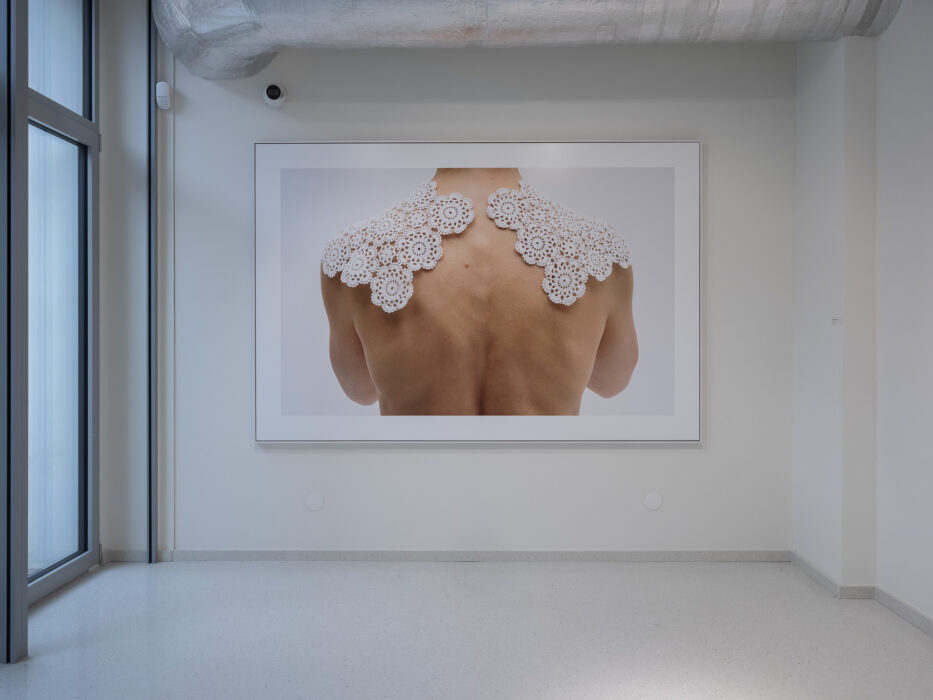
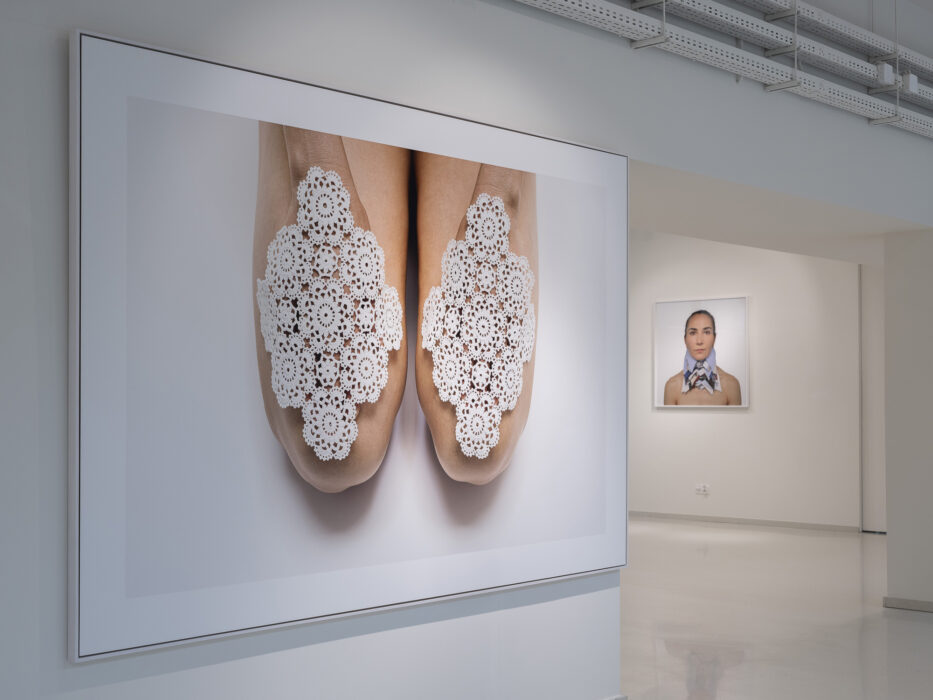
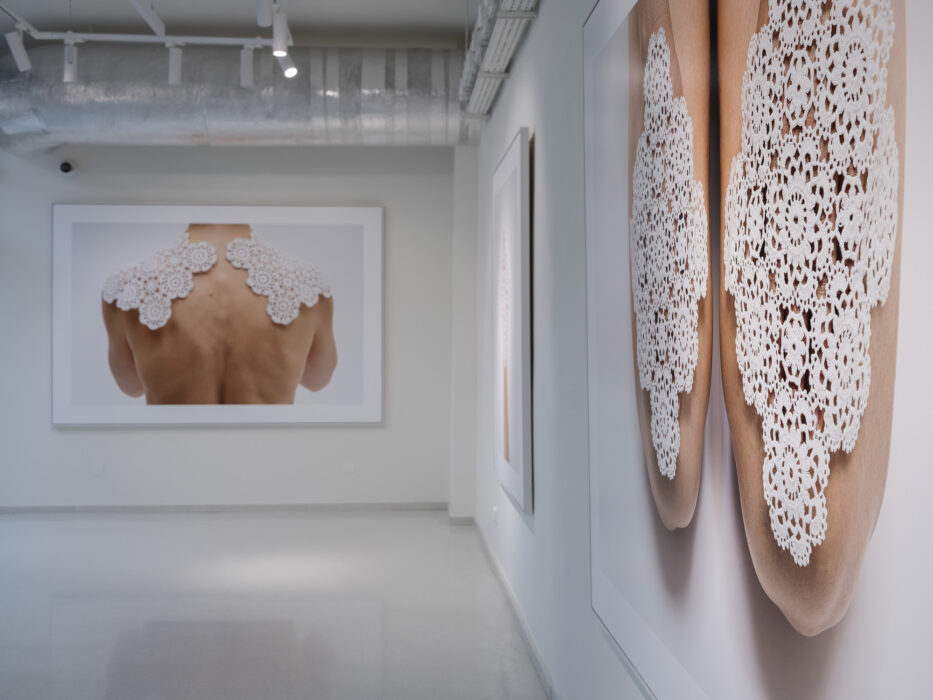
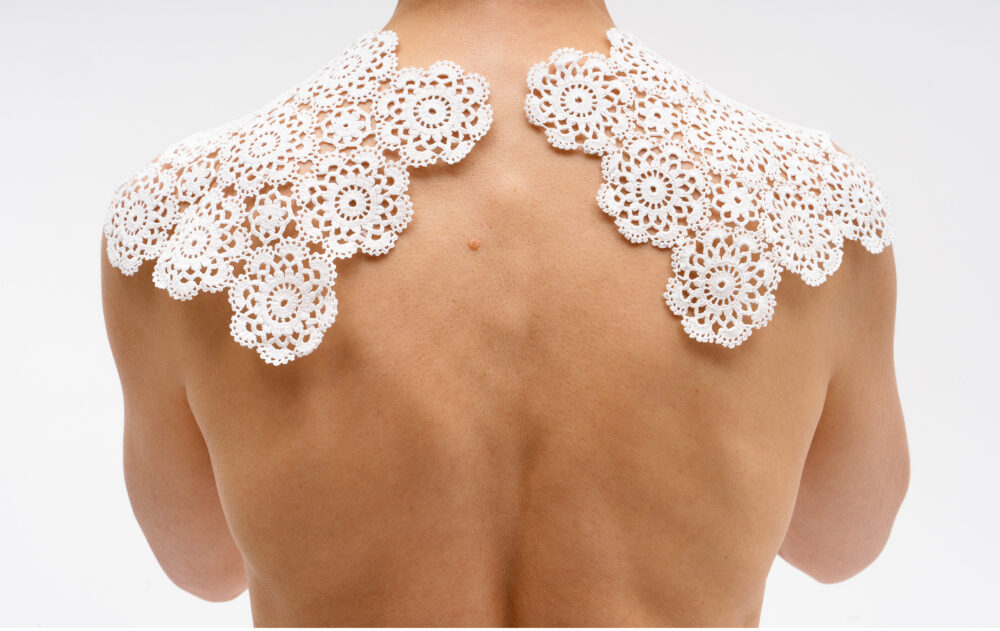
In Long Neck and Mitgift-Dowry-Çeyiz, Baydu consistently exposes the mechanisms of oppression directed at women across diff erent cultures and societies. The depiction of the artist’s unnaturally elongated neck – framed by collars from men’s shirts – is a critique of the painful practices tied to the pursuit of particular beauty standards that women must conform to in order to fi nd a husband. The napkins, in turn, symbolise the way girls are raised for the role of a wife and the dowry accumulated from the moment a daughter is born. The artist arranges these napkins directly on her naked
body, thus highlighting the way in which the female body is objectifi ed in the process of giving a woman away in marriage.
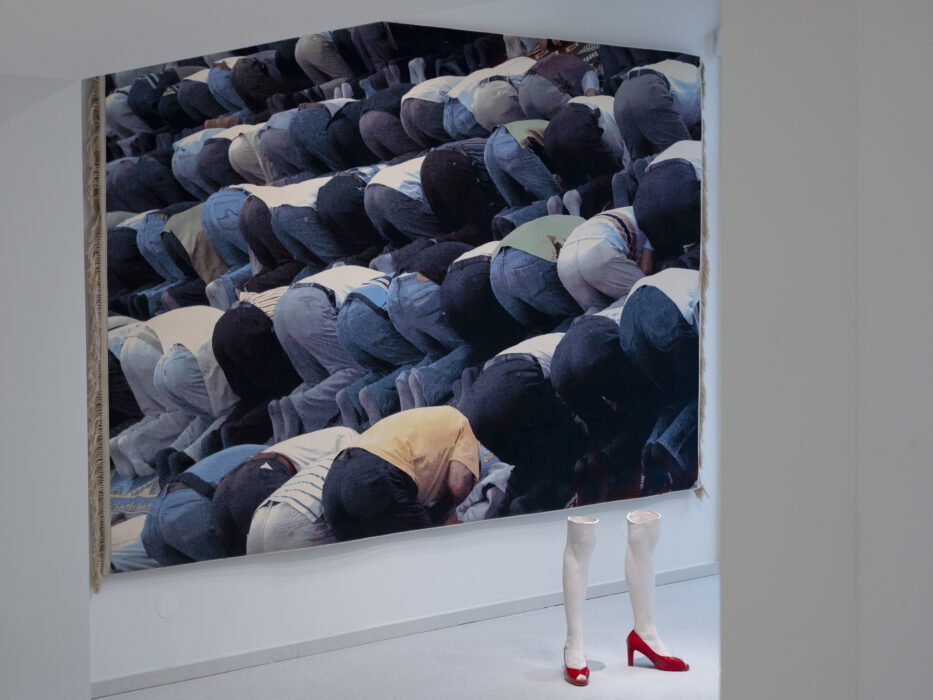
In Cuma (Friday), the artist depicts men praying in a mosque. Baydu places the photograph on a carpet, referencing the rugs on which Muslims kneel facing Mecca. By capturing the male fi gures from behind, she subversively inverts the dynamic – this time, it is the men who are reduced to the role of sexual objects.
The Second Necessity: The Power of Mythology
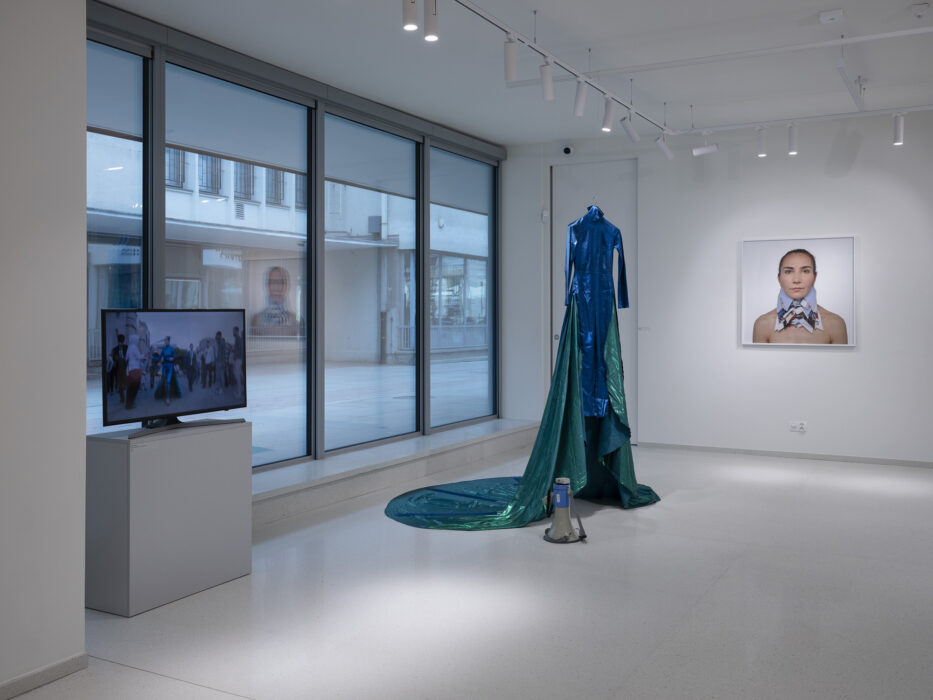
Baydu also draws the strength to challenge patriarchal structures from indigenous mythologies. In the performance Regen kommt! (Rain is Coming!), the artist walks through the streets of the Turkish city of Mardin dressed in a peacock costume, emitting the bird’s call. According to Kurdish belief, this beautiful creature has the power to summon rain, which not only revives the soil but also washes away dried blood and brings about prosperity. Baydu identifi es her own body with the peacock, thereby attributing to a woman – or rather, to a female-animal hybrid – the magical
power to repair reality.
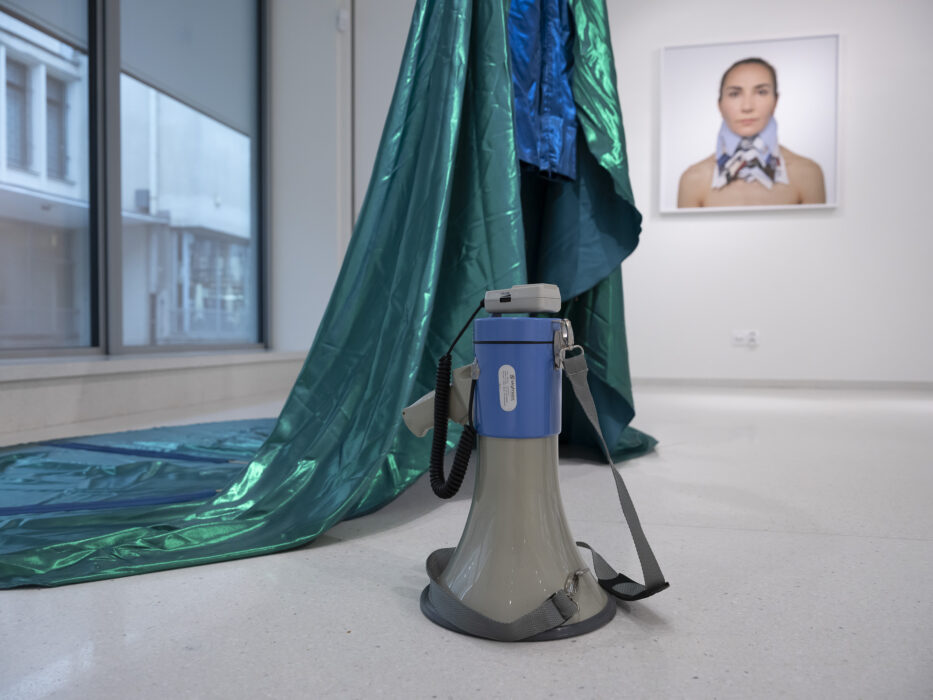
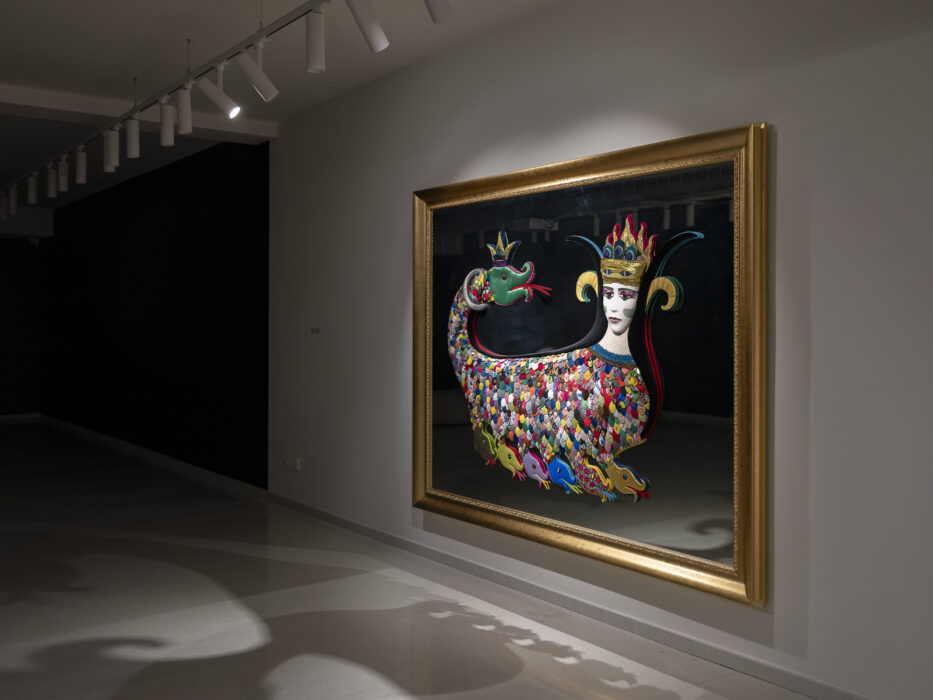
Şahmaran, meanwhile, references a legendary fi gure from Anatolian, Iraqi, and Iranian folk tales. This creature, depicted as half snake, half woman with ram’s horns, symbolises nature, female fertility, and life. In Baydu’s work, its colourful scales are made from pieces of fabric cut from the clothing of particular women, lending Şahmaran a collective resonance. This work is a response to Turkey’s withdrawal in 2021 from the so-called Istanbul Convention (the Convention on Preventing and Combating Violence against Women and Domestic Violence). By drawing on mythology, Baydu activates in Şahmaran the collective strength of women who resist violence, regardless of whether the state supports them or not.
The Third Necessity: Genealogies
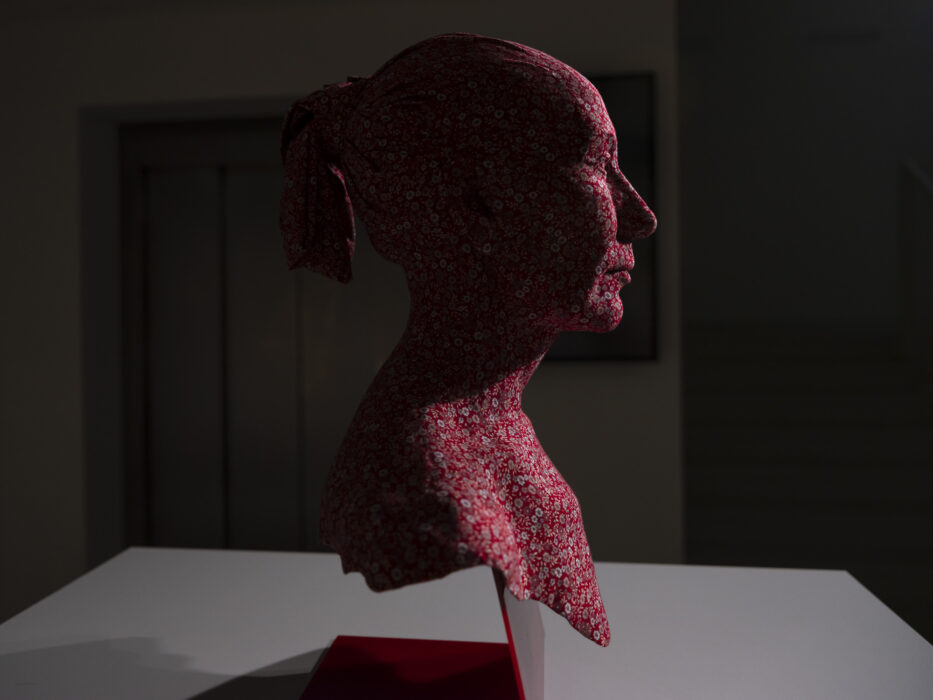
Baydu also makes herself present through textile works: Annesinin Kumaşından – From Her Mother’s Fabric and Kıyafet – Anzug – Clothing. The title of the self-portrait showing the artist in bust form reveals that the fabric used to make it belonged to Baydu’s mother. The work is therefore both a manifesto of female genealogy and a reference to the traditions of the region of Turkey where Baydu comes from – this pattern is characteristic of Anatolian culture. The artist thus not only critically examines her own roots but also draws from these genealogies the inspiration to de(con)struct conservative conventions.
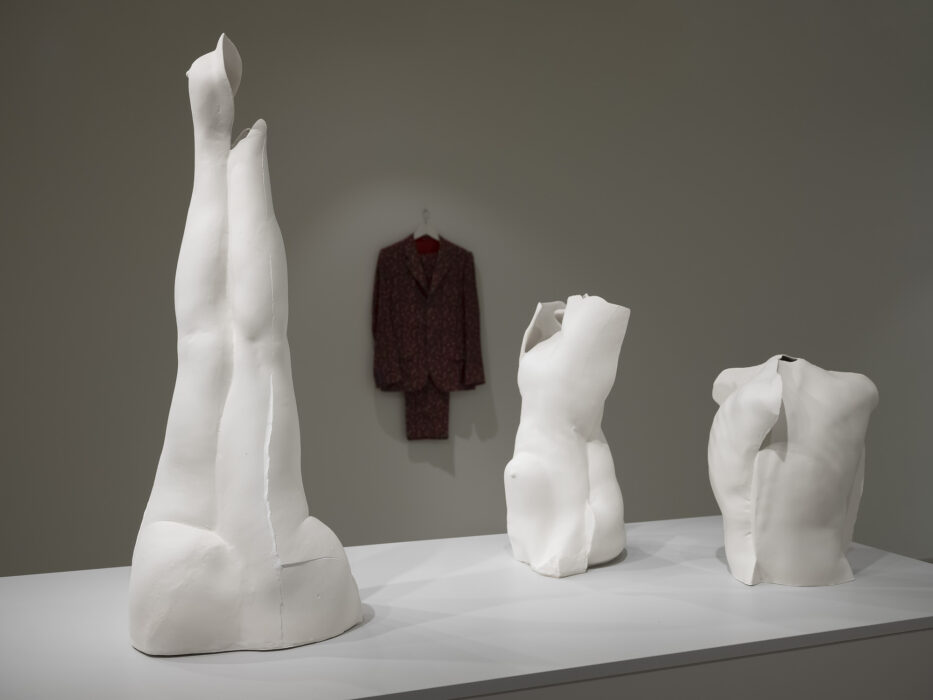
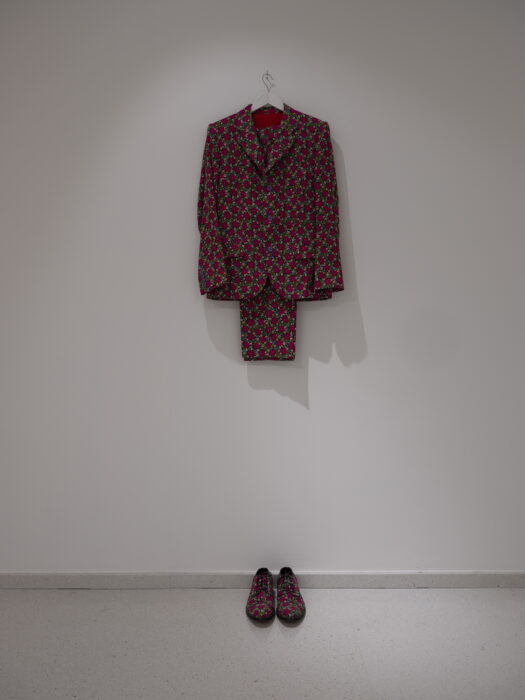
Kıyafet – Anzug – Clothing, which consists of a three-piece men’s suit tailored to fit the artist and shoes in her size, is even more subversive. The suit is made from floral-patterned flannel, and so Baydu launches a double attack on traditional Turkish masculinity: she wears a garment cut for a man, while choosing a fl oral motif associated exclusively with women’s clothing.
The Fourth Necessity: The Power of the Fragile Body
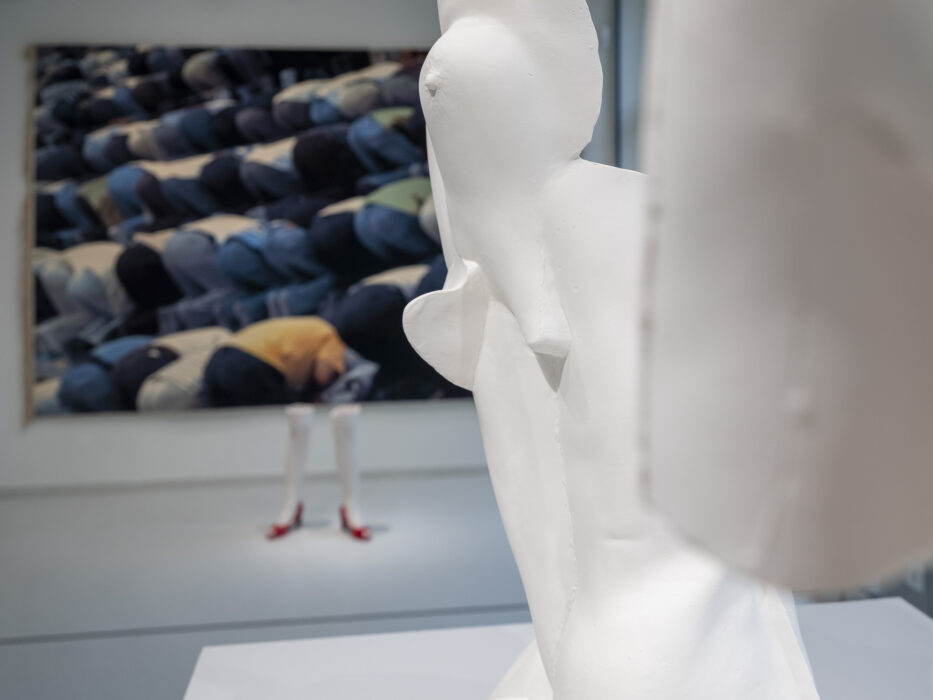
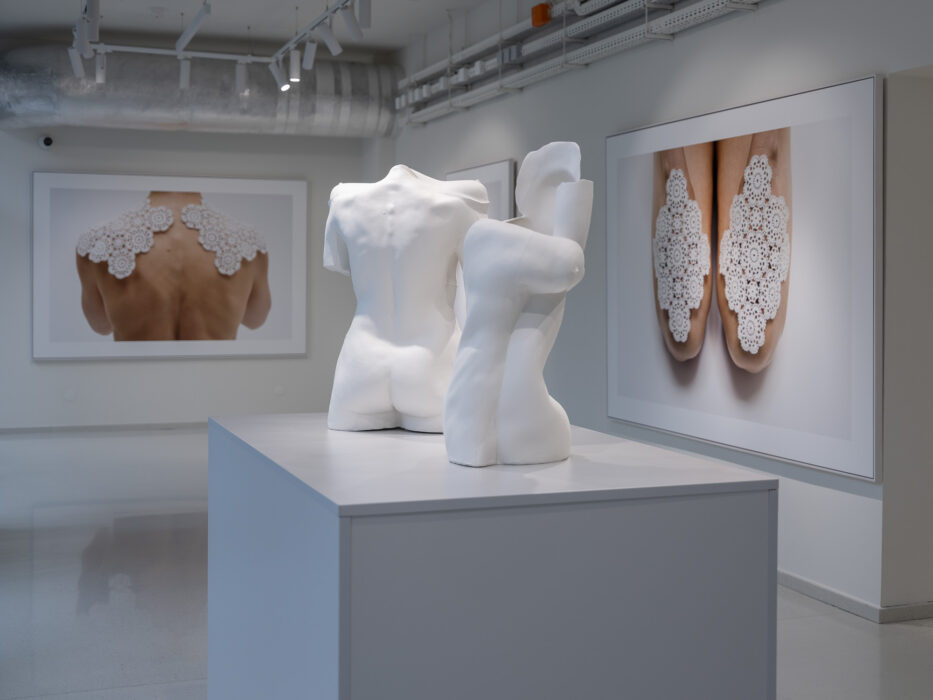
The motif of the self-portrait recurs regularly in Baydu’s work, often in the form of a body cast, as in the series of porcelain sculptures Durchlässigkeit (Permeability) and in another work in the same fragile material, titled -6.19.
In Durchlässigkeit, the artist sensually presents her own fragmented body. She arbitrarily rearranges its parts – such as legs and breasts – creating surprising hybrids. The fragility of the material correlates with the precise, delicate imprints of every wrinkle and skin pore visible on the surface of the sculptures. The female skin is shown as a medium that is permeable and that accumulates experiences of confrontation with the world – both pleasant and oppressive.
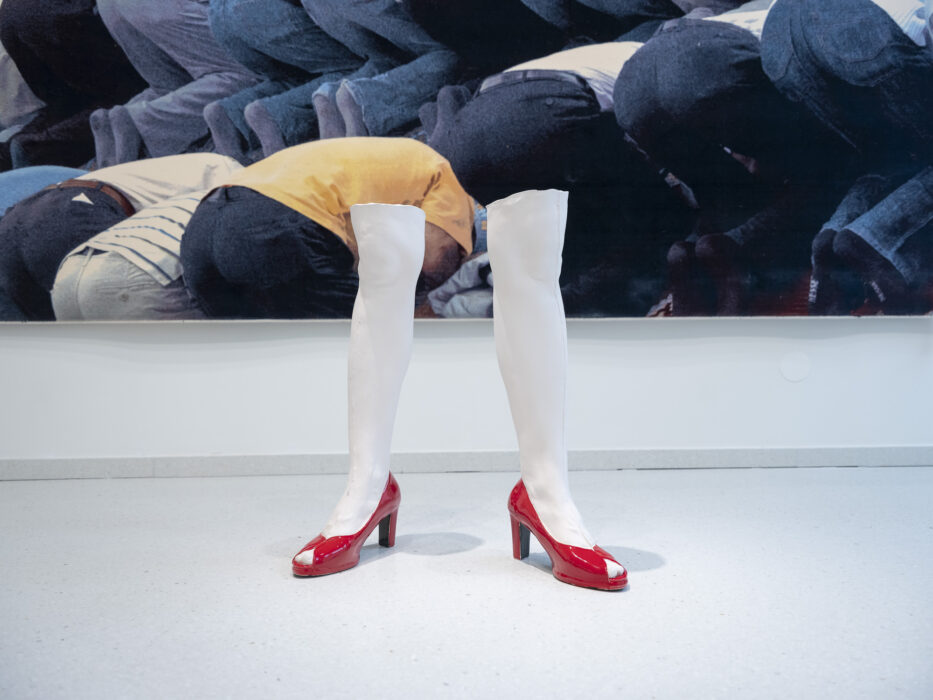
-6.19 is a sculpture depicting a pair of legs in red high heels. Again, the artist works with casts of her own body, but this time to counteract the expectation that women should keep their knees together – a posture considered modest. Baydu, however, allows her legs to behave more freely: in the gallery space, she places them quite far apart, as if to manifest freedom from oppressive patriarchal conventions.
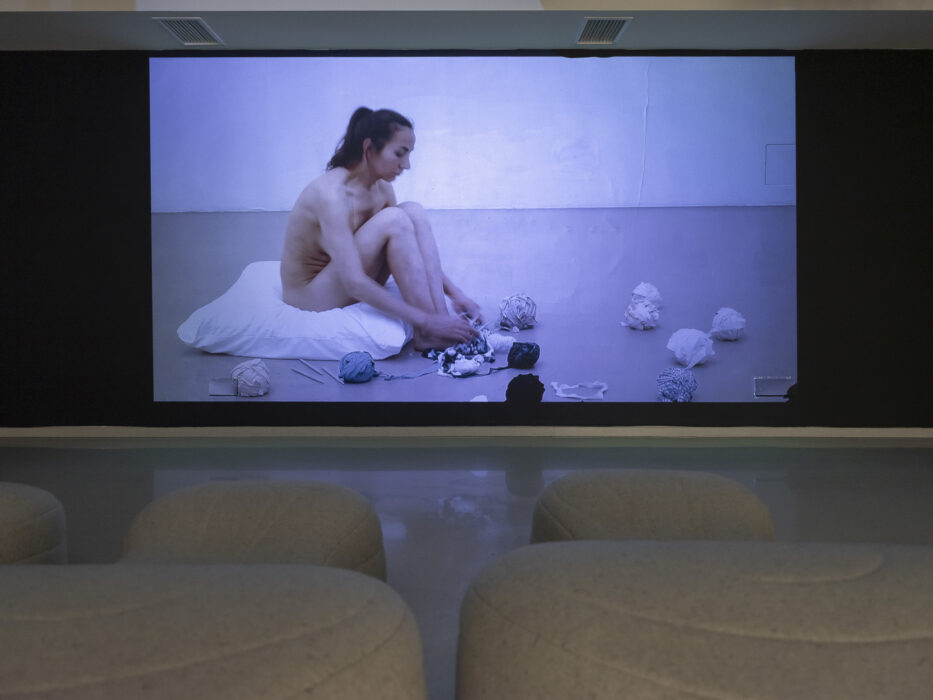
The artist’s body also appears in the video Cocoon – Koza, in which Baydu crochets a kind of cover. Its creation is time-consuming, and the material consists of shirts belonging to men whom the artist knew personally. The piece reveals its ambivalent character: on the one hand it appears to protect the naked female body, on the other, it imprisons it and isolates it from the outside world.
The Necessity of Empowerment
Baydu’s works are not just a diagnosis of the current state of aff airs, but above all a form of empowerment. They proclaim resistance and carry with them the hope that art can be a vehicle for revolutionary ideas that will, eventually, contribute to a change in social attitudes. To think and act in this way is, in these times of conservative backlash, simply a necessity.
curator: Marta Smolińska
[1] In 2016, Mehtap Baydu participated in the group exhibition Czyste wody [Pure Waters] at the Centre for Contemporary Art “Znaki Czasu” in Toruń and in the group exhibition Odłamki rzeczywistości. Berlin – Trójmiasto [Fragments of Reality: Berlin – Tricity] at the State Art Gallery in Sopot.