
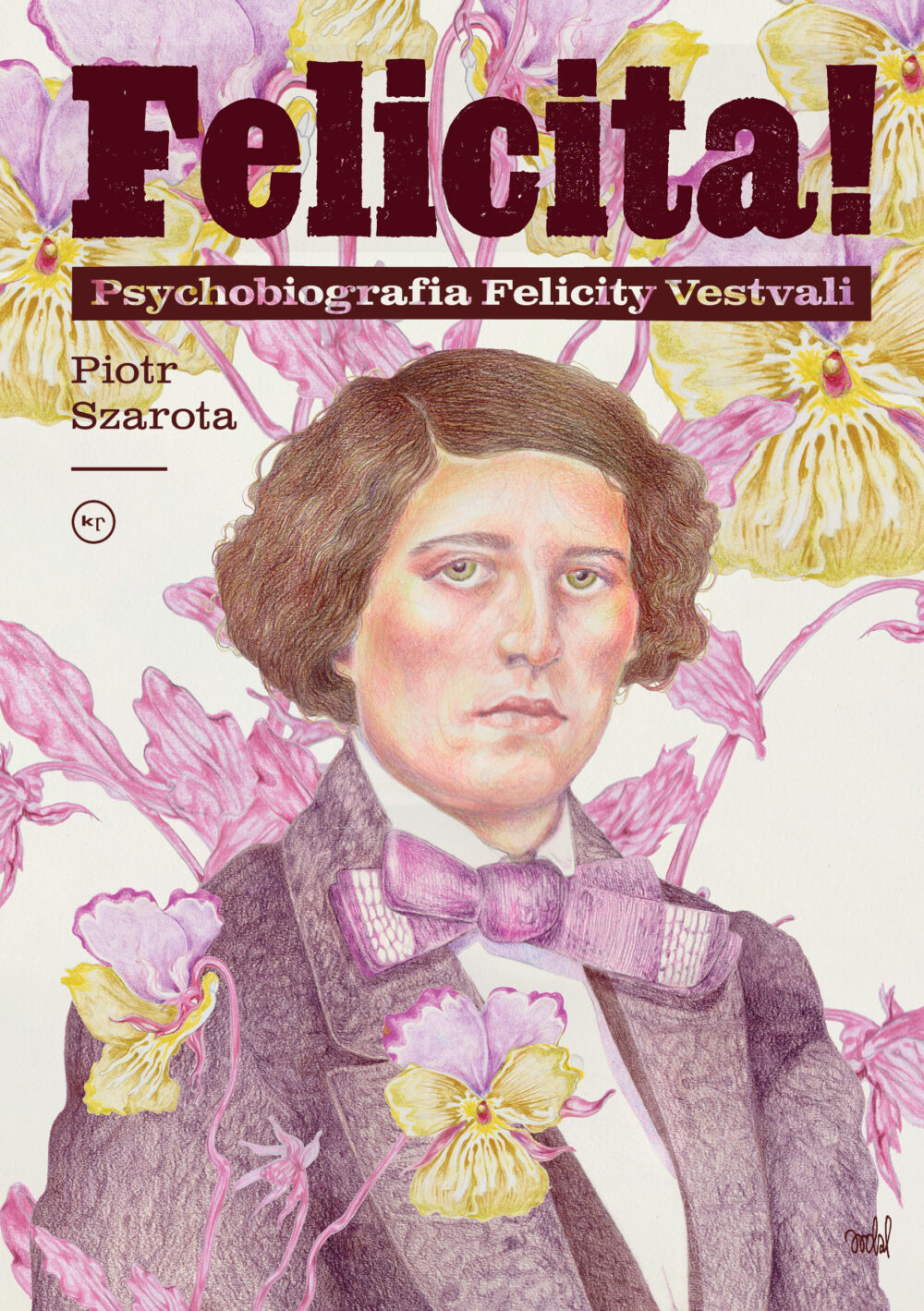
Today, Felicita Vestvali is a little-known star of nineteenth-century Europe and America. For ten years, beginning with her debut at La Scala in 1853, she performed as an operatic singer. She achieved her greatest fame in the United States, where she was called Vestvali the Magnificent. Possessing the rare contralto voice, she specialised in so-called en travesti roles, i.e. male parts intended to be performed by women.
In 1863, she left the operatic stage in order to try her hand as a dramatic actress. Her success exceeded all expectations: she became one of the first American celebrities, and admirers of her acting talent included Abraham Lincoln. She began with roles in adaptations of French boulevard comedies and later specialised in male Shakespearean roles, the most celebrated of which was her Hamlet.
Importantly, she was the first artist openly acknowledging her Polish origins to achieve an international career. A born rebel, she challenged contemporary standards of femininity. She never married and, as an artist, was compelled to struggle with men for equal treatment. Although regarded as a beauty, she was said to be suspiciously tall and excessively broad-shouldered. Her lifestyle, which was at odds with the conventions of the age, caused considerable scandal. For almost twenty years she was in a relationship with the German actress Elise Lund. Together they raised Felicity, an illegitimate daughter, and appeared on stage as Romeo and Juliet.
Vestvali’s uniqueness exposed her to ridicule, yet many looked up to her as a source of inspiration.
moderator: Waldemar Kuligowski
This description is taken from the website of Krytyka Polityczna, the book’s publisher.