
9.45–10.00 Arrival
10.00–10.05 Introductory Remarks
SESSION 1: 10.05–11.05
Aesthetics as World-Making after the “End” (Chair: Anne Fuchs)
Jeanne Riou (University College Dublin), Art as Agency
Michael Brophy (University College Dublin), From the End of the World to the End in the World: Poetic Openings in Michel Deguy and Hélène Dorion
Andrzej Marzec (Adam Mickiewicz University), Aesthetics is the New Metaphysics: Speculative Turn
This session explores how aesthetics and art function as forms of metaphysical inquiry in times marked by crisis and narratives of ending. Rather than treating the “end of the world” as finality, the speakers consider how poetic, philosophical, and artistic practices open alternative ontological horizons. Art emerges here as a generative force for rethinking world, agency, and shared reality.
Transition break 11.05–11.10
SESSION 2: 11.10–12.10 (Chair: Marek Wasilewski)
Imagining Otherwise: Aesthetic Imagination, Animism, and Speculative Worlding
Anna Markowska (University of Wrocław), Grandpa Rabbit, or Why Artists Are Needed in a Polycrisis
Mary Gallagher (University College Dublin), Looking back at Irish Responses to the Congo Rubber Genocide: Aesthetic Imagination and Speculative Worlding in Times of Crisis
Marianna Michałowska (Adam Mickiewicz University), “Small Range” Artistic Activities as an Attempt to Overcome the Stagnation of Polycrisis — the Case of “Black Heart” by Basia Budniak
Focusing on imagination as a mode of response to crisis, this session highlights animist thought, speculative worlding, and small-scale artistic interventions. The papers show how relational ontologies, historical reflection, and grassroots creativity can counter paralysis and fear. Together, they propose imagination as a vital resource for resilience and reorientation in the context of polycrisis.
Coffee break 12.10–12.30
SESSION 3: 12.30–13.30 (Chair: Anna Markowska)
The Crisis of Representation: Language, Visibility, and Counter-Visuality
Helen Doherty (freelance artist, Dublin), Throwing a Book at It: A Short Encyclopaedia of Contested Words
Anne Fuchs & Megan Kuster (University College Dublin), Permacrisis in Practice: From Representation to Interaction
Piotr Juskowiak (Adam Mickiewicz University), How to (Counter)visualize Ecocide? Nonhuman Animals in Photographic Representations of the Flood in Nova Kakhovka
This session addresses the instability of language and representation under conditions of polycrisis. From endangered vocabularies to the invisibility of nonhuman suffering, the speakers examine how crisis challenges what can be said, shown, and known. The session foregrounds counter-visual and performative strategies that resist erasure and expand perceptual and political awareness.
Lunch break 13.30–15.00
SESSION 4: 15.00–16.00 (Chair: Megan Kuster)
Material Ecologies: Rivers, Gardens, and More-than-Human Archives
Andrea Gogova (Comenius University), Rethinking Water: Integrating Art and Science for Sustainable Human-River Relationships
Michał Kępski (Adam Mickiewicz University), Illustrated River Postcards and Aquatic Objects: Towards the Epistemology of Polycrisis
Petr Gibas (Masaryk University), Aesthetics of Care for Life in the Urban Garden
Turning to material environments, this session explores rivers, gardens, and ecological sites as living archives of crisis and care. The papers highlight how water, soil, and cultivated urban spaces record long-term entanglements between humans and more-than-humans. Attention shifts from representation to embodied ecological relations and practices of care.
16.00–16.20 Coffee break
SESSION 5: 16.20-17.20 (Chair: Monika Bakke)
Participatory Ecologies: Listening, Making, Co-Creating
Jadwiga Zimpel, Piotr Kędziora, Jakub Dumanowski (Adam Mickiewicz University), Weaving Transdisciplinary Ecotones: Speculative Inquiry into Acoustic Design Methodologies
Sarah Comyn (University College Dublin), Imagining and Printing Otherwise
The closing session emphasizes collaborative and sensory practices that engage communities directly. Through acoustic design and collective printmaking, the speakers present art as a relational and participatory process. The session concludes the workshop on a forward-looking note, foregrounding shared experimentation and tangible forms of collective action.
17.20–17.40 Closing remarks
18.00–19.00 Guided tour of Hubert Czerepok’s exhibition The Enemy is Love
19.15 Dinner
Venue: GaMA Stary Rynek 6, Poznań
Contact: monika.bakke@amu.edu.pl and marek.wasilewski@arsenal.art.pl
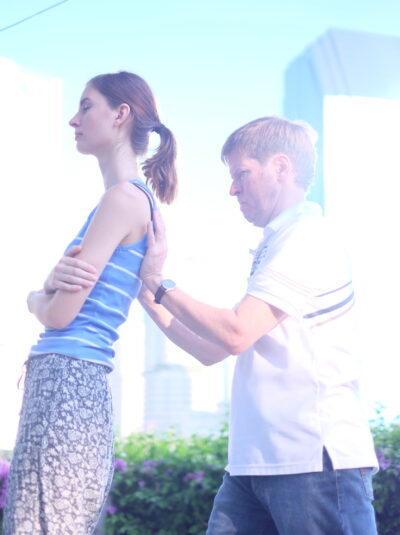
fot. Ameryka z wystawy Wróg jest miłością | Hubert Czerepok, fot. Michał Adamski