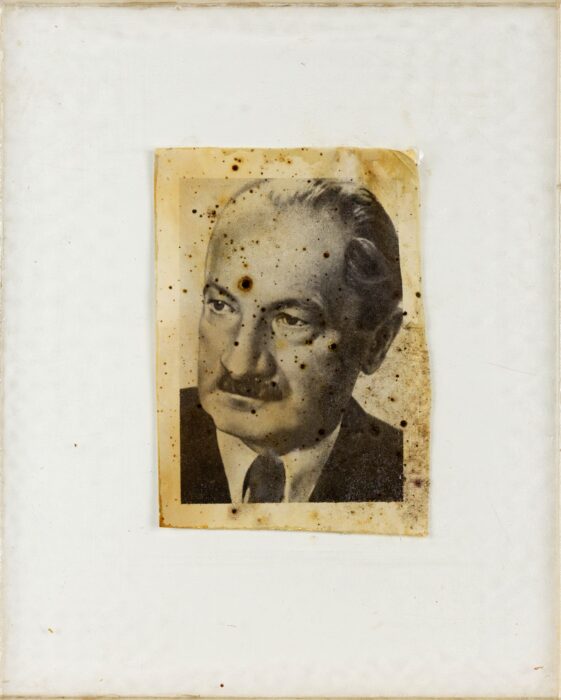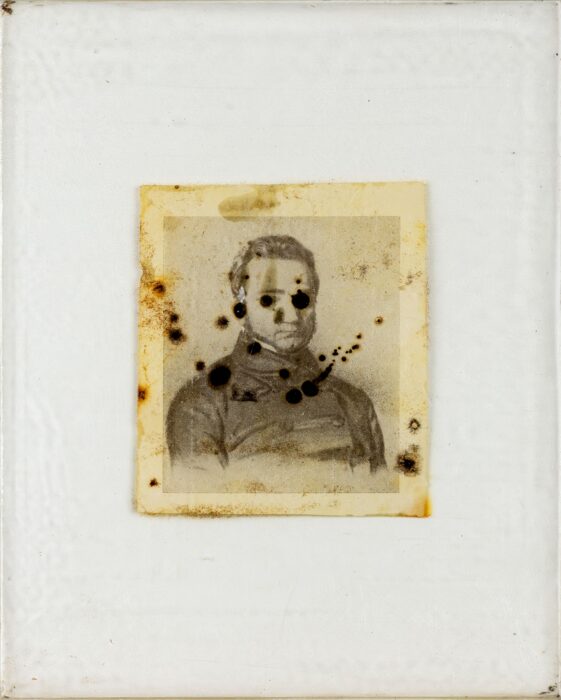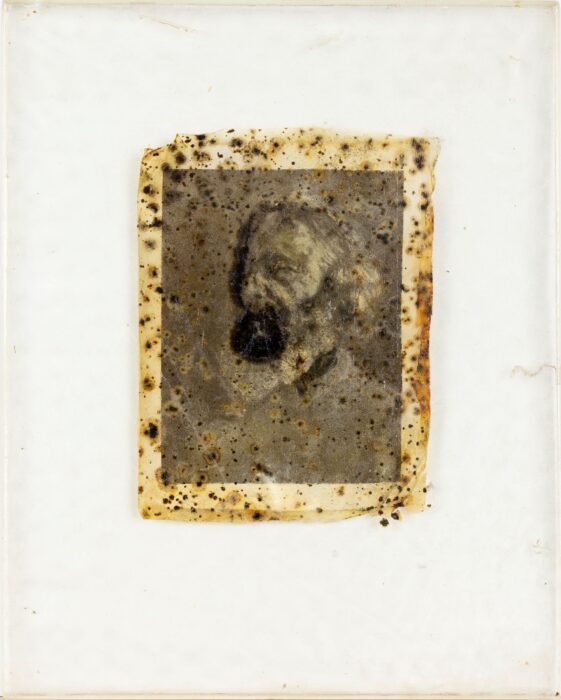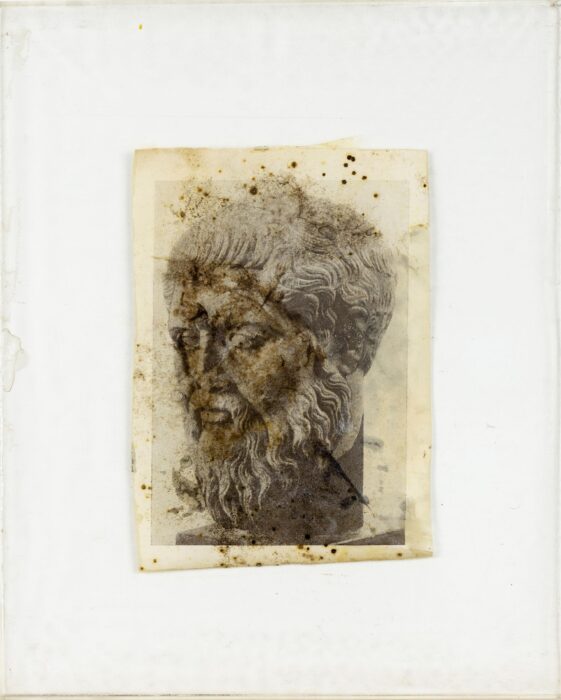
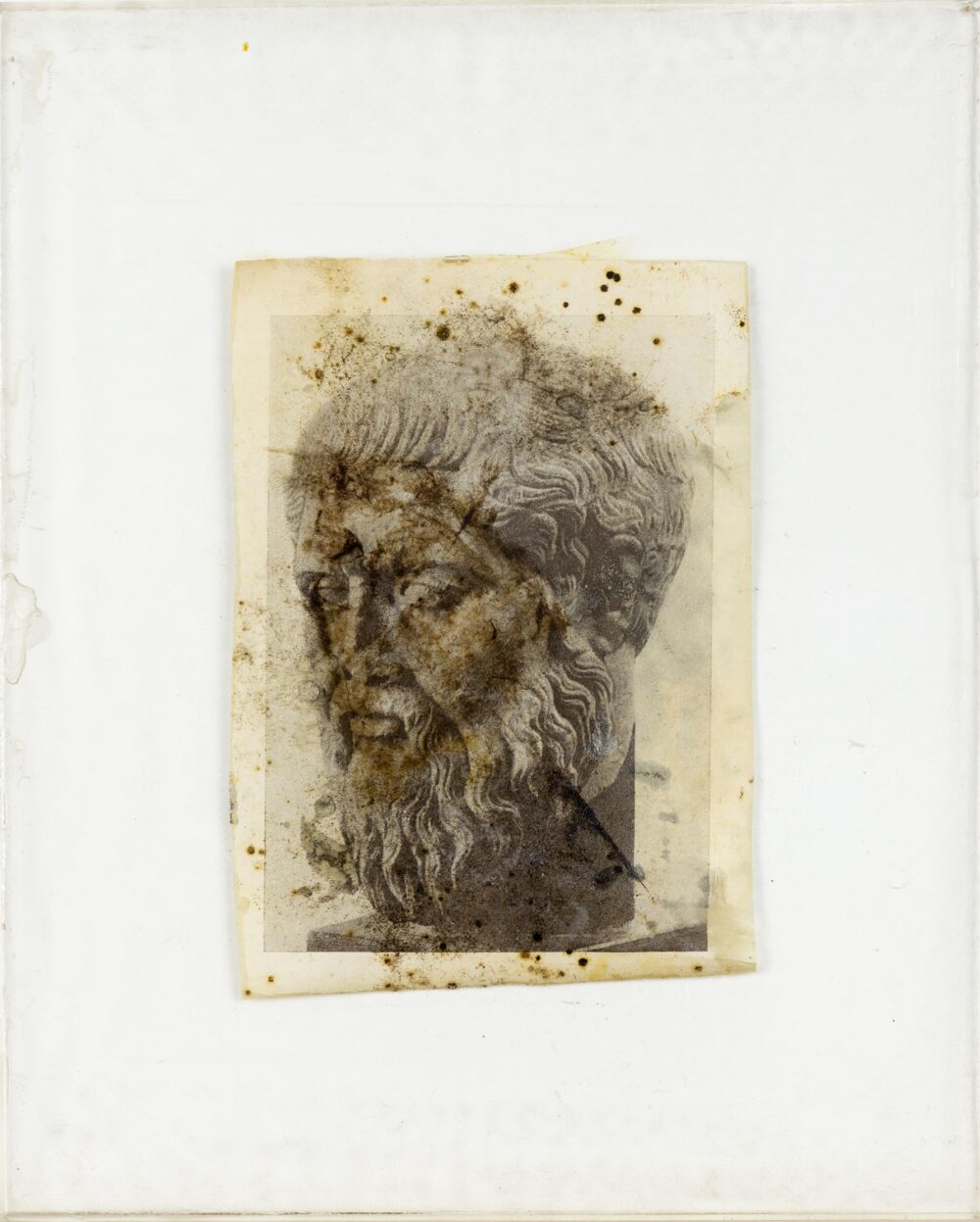
The Zoe-therapy series, created between 2015 and 2017, was first shown as part of Project Room at the Ujazdowski Castle Centre for Contemporary Art in Warsaw in 2015. Two years later, it was exhibited at Rodriguez Gallery, Poznań. The works show the continuous process of decomposition as endured by artefacts of European civilisation and visual representations of great thinkers. The artist cultivates colonies of microorganisms, fungi, and bacteria that slowly overgrow the images borrowed from Władysław Tatarkiewicz’s History of Philosophy. Lelonek’s intention is that her action is recognized as protest against anthropocentric perceptions of the world.
Diana Lelonek is an artist and activist. She graduated with a degree in photography from the University of Arts in Poznań in 2014 and completed an interdisciplinary PhD at the same university in 2019. She participated in a student exchange hosted by Shanghai Normal University. Lelonek is a member of the international movement Earth Strike, which aims to urge states and corporations to “take decisive action to reduce anthropogenic greenhouse gas emissions and stop the destruction of wildlife.” The group’s activities include organising protests. In 2018, it took part in the first Camp for Climate in Poland. Lelonek received visual arts in the visual arts category. One of her most recognisable works is her PhD project, the Center for Living Things, established in 2016. This pata-institution collects and presents “waste-plants,” found on the border between culture and nature such as illegal landfill sites, which are then transferred to galleries and exhibited as ready–made objects.